Wild Honey, Ecstatic Work |
|
~•*•~
'Black honey in its dark brood cells, is a wild liquor of ecstatic work. Bright sun and gauze exhaust its details'
20th October: Brood Nest Honey
from Bee Journal, 2012
Sean Borodale
|
|
|
|
Greetings Friends,
We are back with some good news in these tumultuous times. Firstly, our award winning Wild Honey and bee wares are in stock again!
We have some Post Brood and Wild Honey varieties available, plus a small amount of Wild Honeycomb and Beeswax on offer!
Secondly, our bees are starting to forage in the Blue Mountains which means Spring has Sprung and we are hoping to produce some more Wild Honey and Honeycomb in the coming months.
Thirdly, Tim's Natural Beekeeping approach to managing Varroa destructor is yielding some positive outcomes so he has penned an article outlining our approach to managing the global pest to honey bees within our Warre/Natural Beekeeping operation.
We will also be sharing some other non-beekeeping related news, and of course Tim will update you on his very busy winter months and the start to the new bee season. Happy reading!
|
|
Award Winning, Active Wild Honey
The Best of the Best
|
|
Our Wild Post Brood Honey is a unique, award winning honey harvested exclusively from ‘post-brood’ combs (combs that were once used in the nursery of the nest and have been repurposed by the bees for honey storage). These rare combs are unique to Warré beekeeping. Aged for up to 5 years in the hive, post-brood combs contain both the essence of the bee colony superorganism and the foraged plants' nectar, pollen and ‘kino’ resins. As a result, the brood cells contain the highest amounts of bee bread (fermented pollen) and propolis, producing an outstandingly rich and complex flavour. The brood combs are pressed at the end of the season and then the liquid wild honey is settled and bottled immediately into glass jars, where it sets into a smooth creamy texture.
Our Post Brood Wild Honey is a testament to the health of our bees and our management of them, the purity of the nectar and our apiary locations. It also scores highly in testing for pollen count, medicinal activity, is chemical free, raw and unheated.
|
|
Yellow Box Post Brood
Limited Edition Wild Honey Release
|
|
Yellow Box and Red Stringybark trees in the high altitude Central Tablelands where our Yellow Box is produced
|
|
|
|
After a long wait, we are very excited to announce the second ever release of our Yellow Box Post Brood Wild Honey. This limited edition is particularly close to our heart, as it symbolises how our Natural Beekeeping approach with Warré hives can yield a new and evocative version of an iconic Australian honey variety. Our Post Brood Yellow Box Wild Honey is produced from aged combs that have come through the broodnest, giving the honey a pleasing, spicy nuttiness and high pollen count. |
|

Yellow Box Post Brood Comb fully capped and ripened, ready to harvest and press
|
|
|
|
Blue Mountains Post Brood
Award Winning Wild Honey
|
|
Our most popular variety, Blue Mountains Post Brood, has been the recipient of many awards since we first released it in Australia in 2018 and was one of the key factors in Malfroy's Gold being graced with two National Trophies at the .delicious Produce Awards over the past decade. Recent independent laboratory results have shown that post brood honey from our Warré hives has a pollen count that is 144 times higher than organic ‘raw’ honey and a ‘ medicinal activity’ ranging from TA21+ to TA39+ across all regions and seasons (equivalent to UMF 21+ to UMF 39+). In other words, this is the good stuff! |
|

The incredibly thick consistency of our freshly pressed Wild Honeys
|
|
|
|
These special Wild Honeys are currently available in 500g jars and a few gift packs. As we are the only commercial producer of Post Brood Wild Honey in Australia it is sought after by chefs and the public alike so be sure to snaffle some up as numbers are limited and will sell out very quickly. Please don't despair if you do miss out this time around as we hope to release some more Post Brood honey in a few weeks. Stay tuned! |
|
Mounting a Mite-y Resistance |
|
A Natural Beekeeper's Approach to Varroa |
|
Colonies resistant to Varroa can detect mites underneath cells and uncap them when the bee pupae is at ‘purple eye stage’, which disrupts the mites breeding cycle. Worker bees then either remove the brood or re-cap the cell, thereby saving the developing brood
|
|
|
|
Over the past few years, barely a day has gone by without someone asking us ‘where have all the bees gone!?’
Farmers and orchardists have noticed the disappearance of bees, gardeners have reported their plants are devoid of bee activity, bush walkers have commented on the silence they encounter in the bush.
What is the cause for this precipitous decline of honeybees? The answer is Varroa destructor, the tiny parasitic mite that arrived in Australia in 2022 and that is having a huge impact on bees, and therefore beekeepers and food growers. |
|

Allowing colonies to swarm (reproduce) naturally and raise and mate their own queens has resulted in some spectacular and diverse physical variations seen here in this wild queen.
|
|

A beautiful natural swarm in one of our apiaries. Swarming is critical for bee health as it reduces Varroa numbers and refreshes the genetics of the mother colony
|
|
|
|
To give our customers a better understanding of the situation and how we can maintain a chemical free operation despite this new blight on beehives through much of Australia, we have outlined how we actively planned for the arrival of Varroa for over twenty years and detail our lived experience during the last four years dealing with the mite.
Despite the losses we have suffered and immense challenges looming, our natural beekeeping methods, and the positive outcomes we are seeing at the moment, help to keep us optimistic about the future with our bees. |
|
'Our beekeeping business was established with the knowledge that Varroa would one day arrive in Australia (it had already appeared in New Zealand in 2000) and have an enormous and ongoing impact, with the problems appearing to get worse every year in some countries... When founding our business, one of our key missions was to investigate ways to reduce stressors on the colonies, and in the process, develop a holistic approach to this seemingly impossible problem.' Excerpt from Tim's article on our approach to managing Varroa naturally
|
|
We thank you for sticking with us during these difficult times and hope this article gives you an insight as to what is involved in producing pure, chemical free and medicinal Wild Honey with Varroa in the picture.
|
|
Back in 2023, Tim was contacted by Julie Gibbs (Australian book publisher) about including our unique beekeeping approach in the Australian Culinary Archive. The Australian Culinary Archive, an initiative by the Powerhouse Museum, is the first nationwide, living repository of the food industry, preserving the legacy of chefs, producers, writers and restaurateurs who have defined the national and international profile of Australian cuisine. Just recently we were contacted by Powerhouse staff again in reference to the project as it will now be included in the opening celebrations for the new Parramatta site. As part of the celebrations held in November, Tim has been invited to join a panel focused on local food producers, reflecting on craftsmanship, sustainability and the role of producers in shaping Australian food culture. |
|

This new national archive launches with generous commitments from Australian food icons including the family of Margaret Fulton, Peter Gilmore, Guy Grossi, Kylie Kwong, Andrew McConnell, Neil Perry, Ben Shewry and John Susman (photo © Daniel Boud)
|
|
|
|

Architectual rendering of the future Parramatta Powerhouse Museum (photo: © mcgregorcoxall)
|
|
|
|
The organisers are also collating information from the archive in a book which will include excerpts from an interview conducted with Tim about his unique approach to beekeeping, his involvement in the natural food industry in Australia and our legacy as a sustainable, innovative beekeeping operation.
Julie explained that "Australian Culinary Archive (Vol. 1) traces the connections and movements that made us: the flavours born on Country and the waves of migration that washed through them. Drawing on the memories of chefs and cooks, producers and providores, writers and photographers, critics and diners, this compendium maps how food can shape a nation." The Powerhouse Museum have been big supporters of our work and produce for many years now and we are honoured to be part of the archive and to celebrate the amazing new museum. |
|

The front cover of Galah Issue 14
|
|

Some of Luisa's images of Tim at work
|
|
|
|
We mentioned in our last newsletter that Tim and Malfroy's Gold were featured in a recent edition of Galah magazine.
Lenny Ann Low and Luisa Brimble visited one of our upper Blue Mountains apiaries to discuss beekeeping with Tim and observe a typical apiary visit at the peak of the beekeeping season. If you missed it, we have now loaded a copy of the article into our media archive on our website.
|
|
For more information on Tim Malfroy and Malfroy's Gold in the public eye, visit our Social, Awards, Blogs and Media pages (the latter also includes recipes from some of Australia's finest chefs who work with our produce!) |
|
|
|
500g Gift Packs featuring our latest Post Brood Releases |
|
As our bees forage in pristine wilderness on native wildflowers and trees, their health is as good as it possibly could be - which means they produce delicious, medicinally active, raw Wild Honeys packed with pollen and propolis.
Pollen richness is a key marker of the ‘rawness’ of a honey and contributes to any health benefits, as pollen (bee bread) has anti-bacterial, anti-oxidant, anti-allergic and anti-cancer properties.
The typical pollen concentration found in conventional honey is between 2,000 - 10,000 grains per gram. We are thrilled that both of our Post Brood honeys were found to contain extraordinary amounts of pollen:
Yellow Box Post Brood: 1,435,107 grains per gram
Blue Mountains Post Brood: 2,601, 286 grains per gram
|
|
|
|
These pollen concentration figures confirm that our style of beekeeping (bee-friendly natural comb Warré hives), method of processing (pressing whole combs instead of extracting) and location (permanent apiaries established in pollen-rich environments in the Blue Mountains and Central Tablelands), result in a truly unique and healthy food that cannot be replicated.
|
|
These two Post Brood varieties are now included in a number of two jar, mixed variety 500g Wild Honey Gift Packs so you can give the gift of health and abundance
to the special people in your life! |
|
Tim has spent a lot of winter packing and bottling our Wild Honey and Honeycomb in various varieties, including our latest limited variety, Yellow Box Post brood and the ever popular Blue Mountains Post Brood.
He has also managed to bottle a small batch of Blue Mountains Polyflora and Yellow Box too. So, for the many customers who inquired as to when these honeys would be available next, now is the time to head to the online store and purchase!!
With Father's Day around the corner, the gift of Wild Honey is always an elegant and considerate choice. Our 500g Gift packs would make a beautiful gift for the amazing men in your family/community.
We also have E-Gift vouchers on offer so you can give the gift of our award winning Wild Honey in a convenient, emailed format.
We predict stock will sell out quickly again but if you do miss out this time around, we are planning to release some more Post Brood honey in a few weeks so keep an eye on your emails!
|
|
Shipping and Housekeeping
(Father's Day) |
|
Please note when ordering that it can take us up to a week to process orders as everything is done in house, from the production of the goods all the way through to the packaging and posting of your order. We generally allow another week for goods to be delivered as we live in Regional Australia. Make sure to take this into consideration when finalising any orders.
To allow enough time for delivery by Father's Day we advise you to place your orders within the next 2 days (by Monday 24th August 5pm) in order for us to meet Australia Post's deadlines.
|
|
~•*•~ This Month's Select Products |
|

Wild Honey 500g
Yellow Box Post Brood
$49.00
|
|

Wild Honey 2 x 500g
Gift Pack Mixed Region
$98.00
|
|
|
|

Wild Honey 2 x 500g
Gift Pack Mixed Region
$98.00
|
|

Wild Honey 500g
Blue Mountains Post Brood
$49.00
|
|
|
|
(Please note as our honey is seasonal, wild, harvested from small apiaries, and bottled in micro batches, natural variation in colour, texture and pollen richness will occur from batch to batch. The honey you receive may be a slightly different or darker colour from that pictured above but rest assured it is the same variety. We do not overheat, filter or homogenise our honey to make every jar uniform in colour and texture as that damages the nutritional integrity of the honey. The honey also naturally varies in colour over time inside the jar as it is a living product - this ongoing process will not negatively affect the wild honey’s taste or nutritional integrity.) |
|
* Please note we are bound by Australian Biosecurity regulations so are not permitted to send honey to TAS, NT or WA |
|
Tim's Warré beekeeping adventures in the Blue Mountains and Central Tablelands |
|
Winter sun, late afternoon in one of our Warré apiaries after a long day beekeeping, Wollemi Wilderness (Blue Mountains)
|
|
|
|
In the last newsletter (April 2026) I wrote of a season that was 'like a rollercoaster - plenty of elated highs and terrifying lows' - and with the forecast of a record El Niño coming up it looks like we might be in for another wild ride! |
|

Freshly built wild honeycomb made by the bees from the unique wildflowers of the sandstone country, lower Blue Mountains
|
|

The beautiful colours and patterns of post brood wild honeycomb, aged for 3-5 years inside the hive and rich with propolis and bee bread
|
|
|
|
This season we hope to build on the important foundations that were laid over the previous three seasons with our varroa resistant wild colonies. In addition to producing beautiful wild honey, we aim to encourage and accelerate the increase of our survivor genetics, fostering Varroa mite resistance through natural selection, often referred to as ‘Darwinian Beekeeping’. You can read more about our Darwinian beekeeping experiment (the only one of its kind in Australia) in the article published today (see above).
|
|

A full box of Yellow Box Post Brood combs, ready to be harvested and cold pressed.
|
|

One of our small permanent apiaries of survivor bees in the upper Blue Mountains, surrounded by heath and Scribbly Gum trees.
|
|
|
|
Typically we use the colder months to get through our winter work - pressing combs, bottling the season's harvest, melting wax, repairing hives etc. However, aside from a few icy blasts, it’s been a mild and short lived winter, supercharging the urgency of completing this work before beekeeping takes precedent.
Thankfully, the results of our hard graft over the last few seasons are finally being realised - thriving survivor colonies and exquisite wild honey. I honestly think the wild honey we pressed this winter is the best we’ve ever done, I’m really chuffed with the quality, and seeing it finally bottled in the jars is satisfying and inspires us to get back out into the apiaries this season. |
|

A Wild drone (male bee) from one of our survivor colonies. The dark colouring and hair show a completely different type of bee to those seen in commercial apiaries
|
|

One of my Apiary buddies - everybody's praying in the apiaries for a good season!
|
|
|
|
On that note, a few early visits to the apiaries in the lower Blue Mountains in July really took us by surprise. The survivor colonies were not only rebounding after a tough late summer, but were actually building comb in winter! Warmer than typical day temperatures, combined with the flowering of Ironbark trees in the region, meant the colonies took the opportunity to expand and were even strong enough to swarm in August - a full month earlier than any previous recorded swarm. |
|

A natural swarm cell. Inside these cells are virgin queens. One will emerge, kill the other virgins and depart on a ‘nuptial flight’, mating with the strongest drones of the region. She then returns to the hive to enliven the colony with new genetics
|
|

A natural swarm contains thousands of bees and the old mother queen. They often cluster in the apiary for an hour or two, before flying off to a new home (often a tree hollow in the surrounding forest)
|
|
|
|
At the time of writing, the beautiful wildflowers of the wild sandstone country have just started to bloom - pea flowers, grevillea spider flowers, wattle and ironbark all combining to create a colourful display and an abundance of diverse food for the colonies. We look forward to sharing more wild honey and stories from the apiaries as the season progresses.
If you enjoy reading our newsletters you can view archived copies of them here, as well as articles that I’ve written which I hope to add to when there is a spare minute.
~•*•~
Tim will continue to fill your feed with updates from the field about the ever changing and unique flora of the regions, bee biology, our wild honey produce and other interesting things - all bee related - follow along below!
|
|
|
|
|
A big thank you to our readers for taking the time to follow what we do and patiently waiting for each Wild Honey batch to be released.
We hope you enjoyed our eighteenth missive and are always happy to hear your thoughts. (If you missed our last missive and would like to read it you can do so here.)
Thank you for reading,
Tim, Emma and the Daughters of Light
|
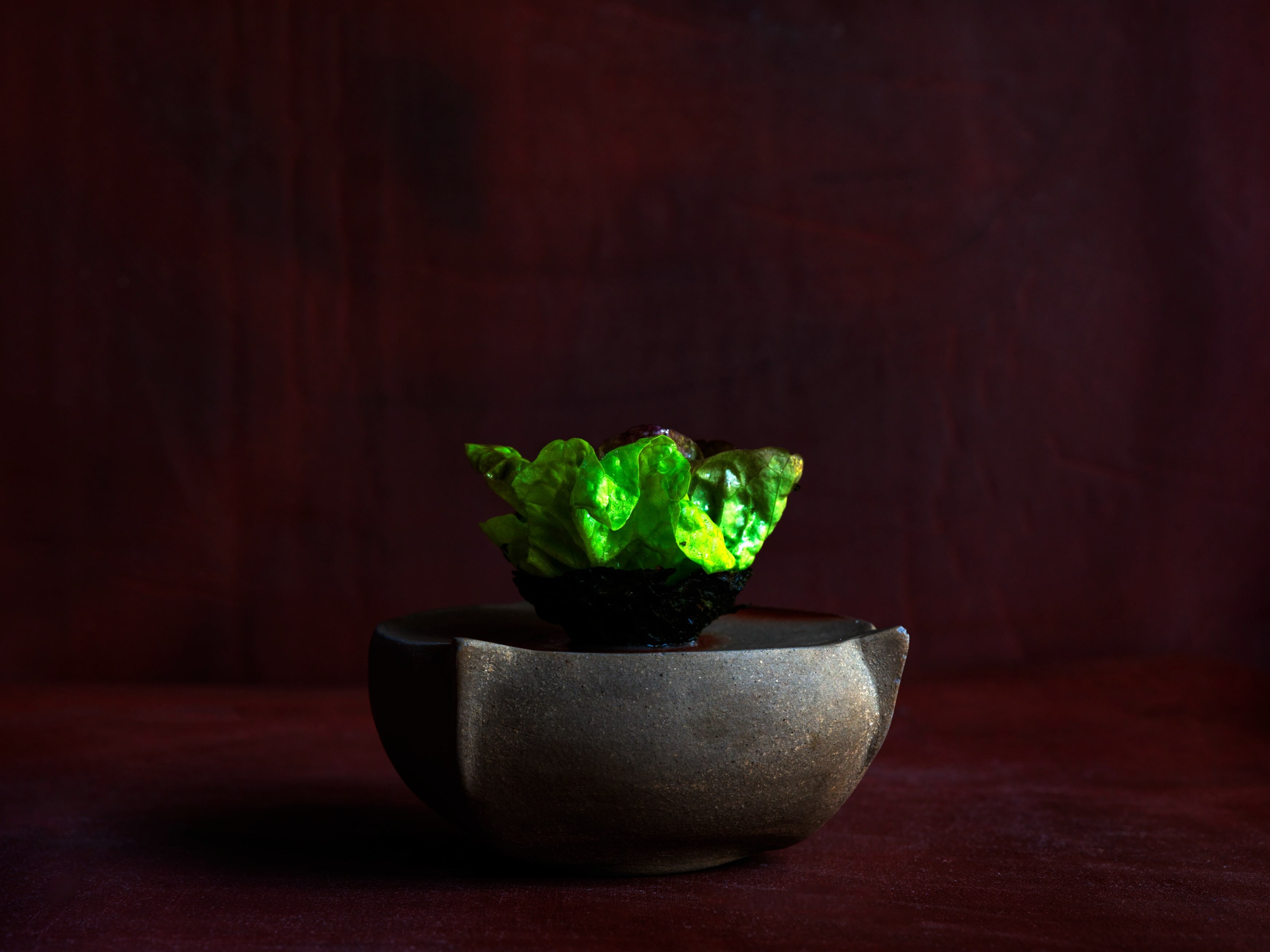
Yiaga's Lettuce Tart, Cos outer leaves cooked, cut and dried for the delicate tart shell, a paste of the cos hearts with white miso and horseradish, and oak lettuce dressed with aromatic herbs, vinegar and our Blue Mountains Post Brood Wild Honey (Photo © @yiaga.au)
|
|
|
|
No longer want to receive these emails? {% unsubscribe %}
|
|
|
|
|